Why a Hard Prune Is Sometimes the Best Thing for a Fruit Tree
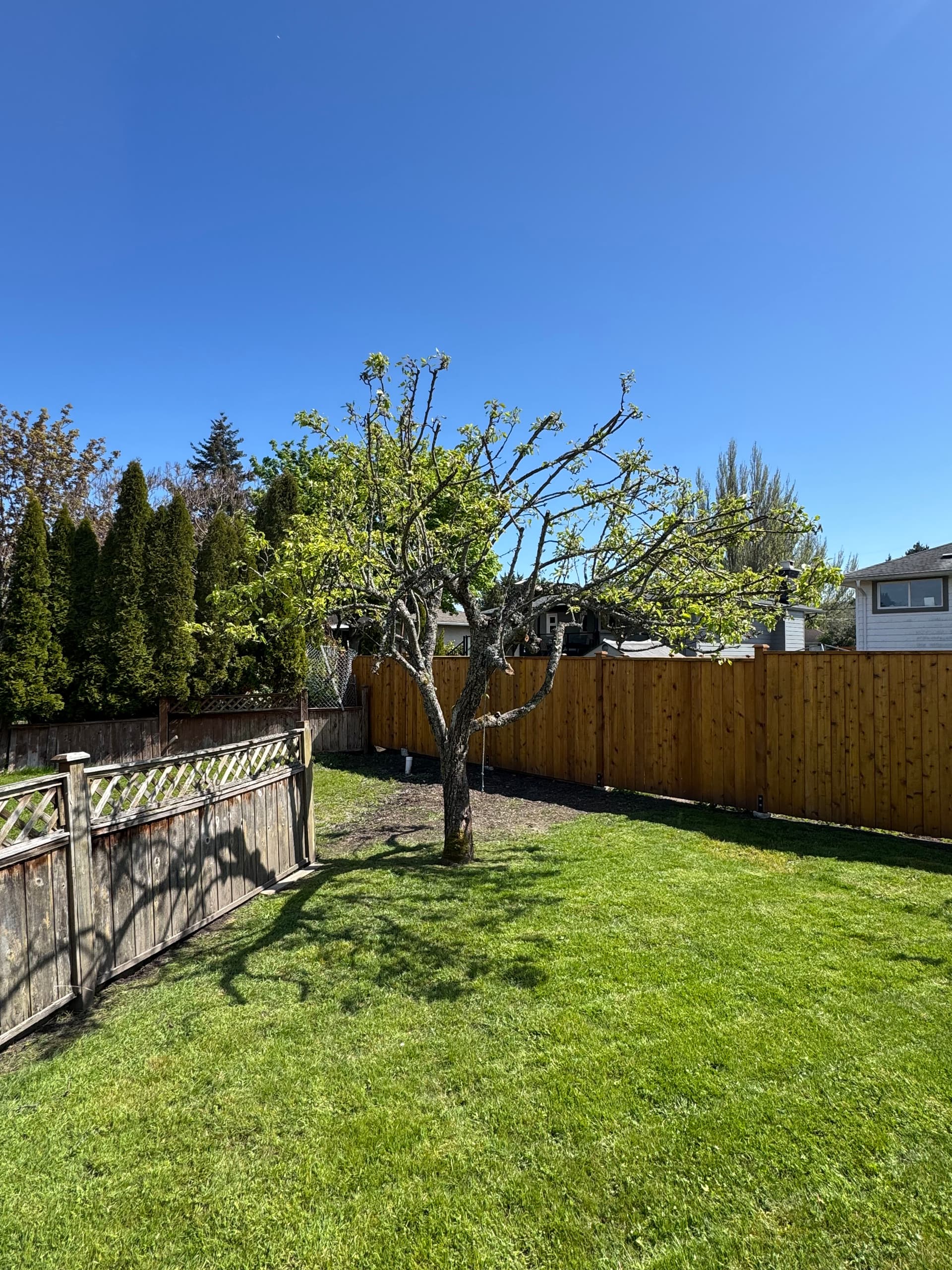
A hard prune can look alarming at first. Bare branches, open structure, less canopy than you started with - it's the kind of cut that makes homeowners nervous. But when it comes to fruit trees, that hesitation is exactly what holds a tree back from reaching its potential.
We've seen it many times. A fruit tree that's been lightly trimmed year after year, never really corrected, just tidied up. The canopy gets dense. Airflow suffers. Fruit production drops. The structure gets messy and hard to manage. What looks like "safe" pruning actually does the tree a disservice over time.
The goal of a proper late-winter prune isn't to make the tree look full - it's to set it up for stronger, healthier growth when the season kicks in. That means removing crossing branches, opening up the canopy, and making cuts that encourage the right structure going forward. It's a long-game approach, not a cosmetic one.
Fresh leaf buds pushing out from clean, well-spaced branches is exactly what you want to see after that kind of work. It tells you the tree responded well - that the cuts were made at the right time and in the right places. That's what good pruning looks like in practice.
Our approach to pruning - whether it's fruit trees, ornamental shrubs, or hedges - always starts with what's best for the plant. Not just what looks tidy at the curb. If you've got a fruit tree that's been neglected or poorly pruned over the years, it's worth having someone take a proper look at it.