How We Bring a Struggling Lawn Back to Life
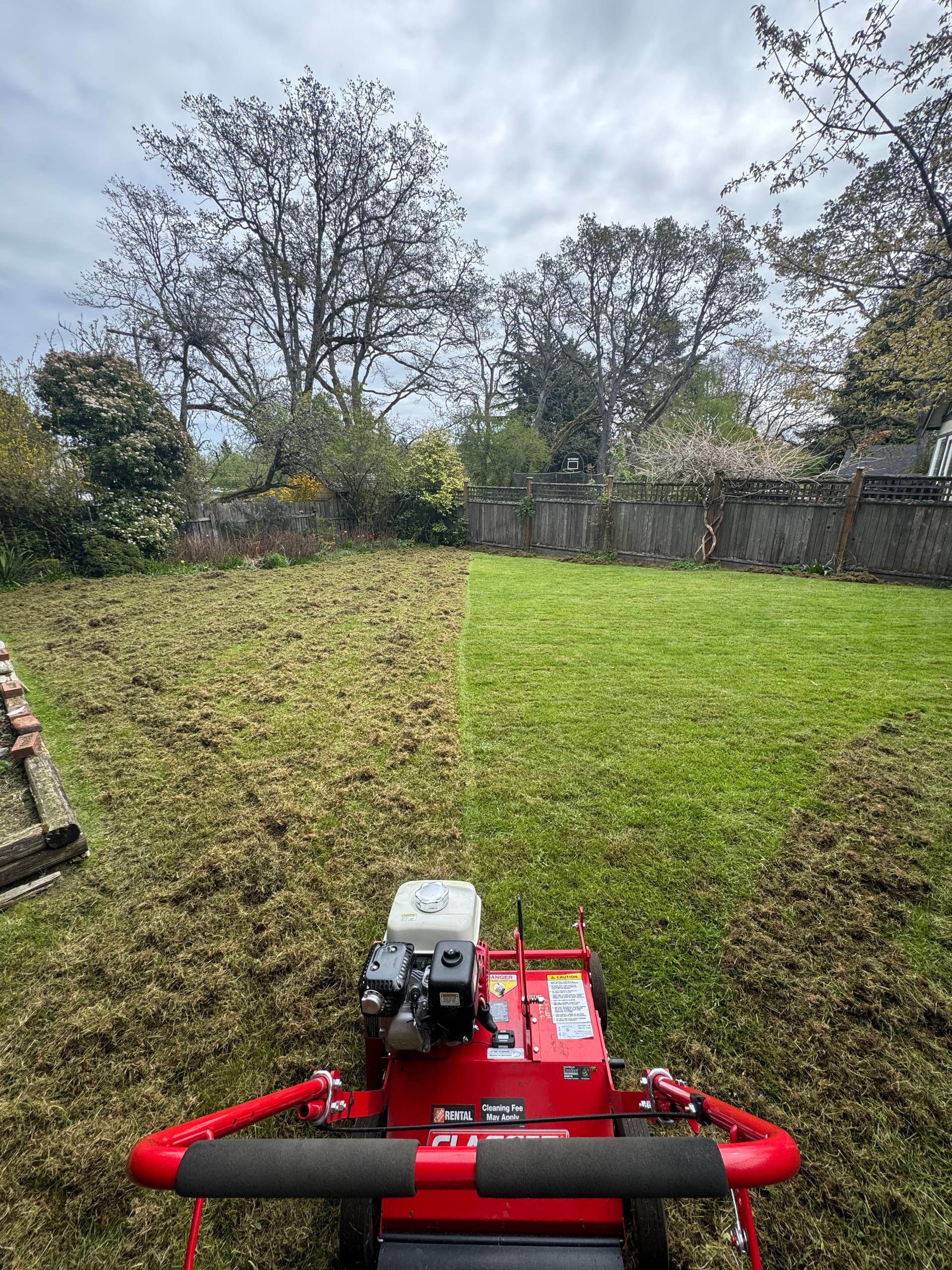
A lot of lawns look fine from a distance but are actually suffocating under a thick layer of thatch and moss. That buildup blocks water, air, and nutrients from reaching the roots. The grass just sits there, barely hanging on. That's exactly the kind of situation where a proper recovery process makes all the difference.
Here's how we approach it. We start with aeration and dethatching - running a power dethatcher across the entire lawn to tear out that compacted layer of dead material sitting on top of the soil. You can see the before-and-after split happening right down the middle of the yard. Left side, freshly dethatched. Right side, untouched. The difference is immediate.
Once the surface is cleared, we get into seeding and compost application. Fresh seed needs good soil contact to germinate, and a light compost layer gives it the nutrients to actually take hold. Skipping this step is one of the biggest reasons DIY lawn recovery efforts fall flat. The seed just doesn't have what it needs to establish.
Moss is a particular problem worth calling out. It creeps in when your lawn is thin or struggling, and once it takes over, it crowds out any chance of healthy grass growing back. Dethatching pulls it up and breaks its hold on the soil. From there, the lawn finally has a fighting chance.
This kind of step-by-step recovery is exactly what our lawn maintenance work is built around. It's not just mowing and moving on - it's understanding what the lawn actually needs and working through it methodically. The results speak for themselves.