Dead Tree Removal and Garden Cleanup Done Right
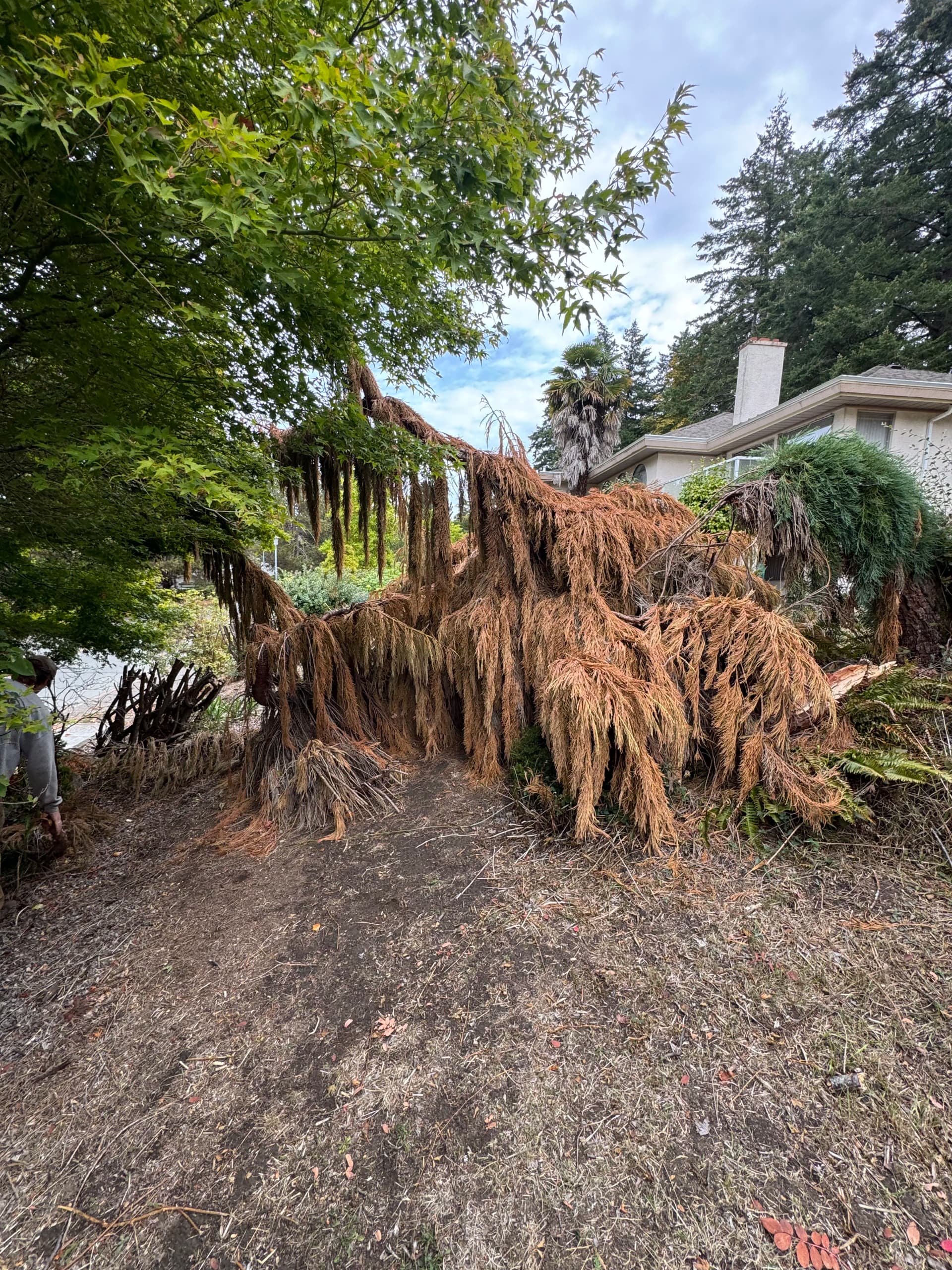
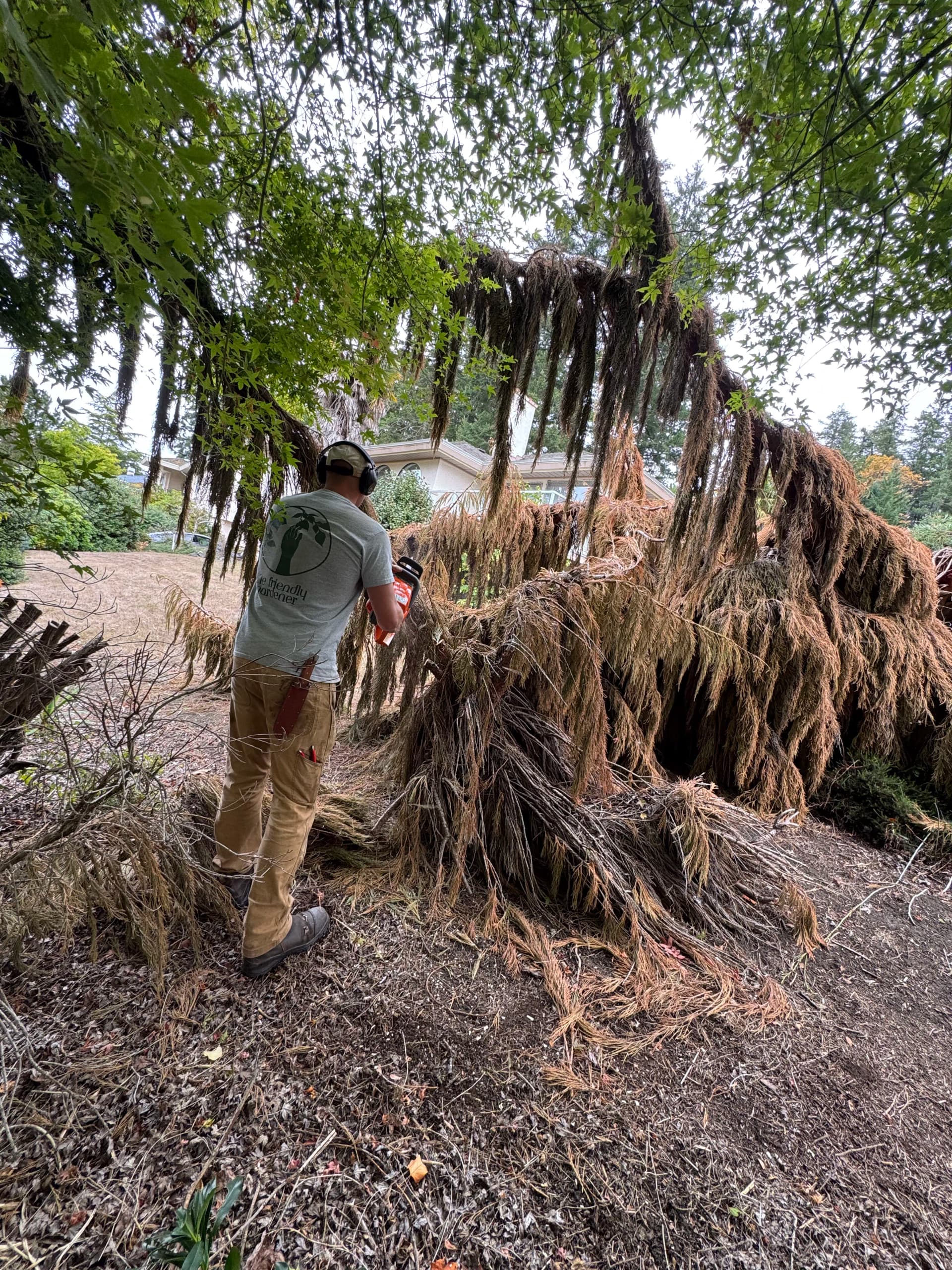
Sometimes a tree just reaches the end of its life. No storm damage, no obvious event - it simply dies off, and what's left is a big, dry, brown mass taking up valuable space in your yard. That's exactly what we were dealing with here. A large conifer had fully died, its foliage turned completely brown and brittle, drooping down in heavy curtains from every branch.
The sheer size of a dead tree like this can make it feel overwhelming. It's not just a visual eyesore - it's a potential hazard, and it blocks off a whole section of the yard from being used for anything else. Getting it out cleanly and safely is the only real option.
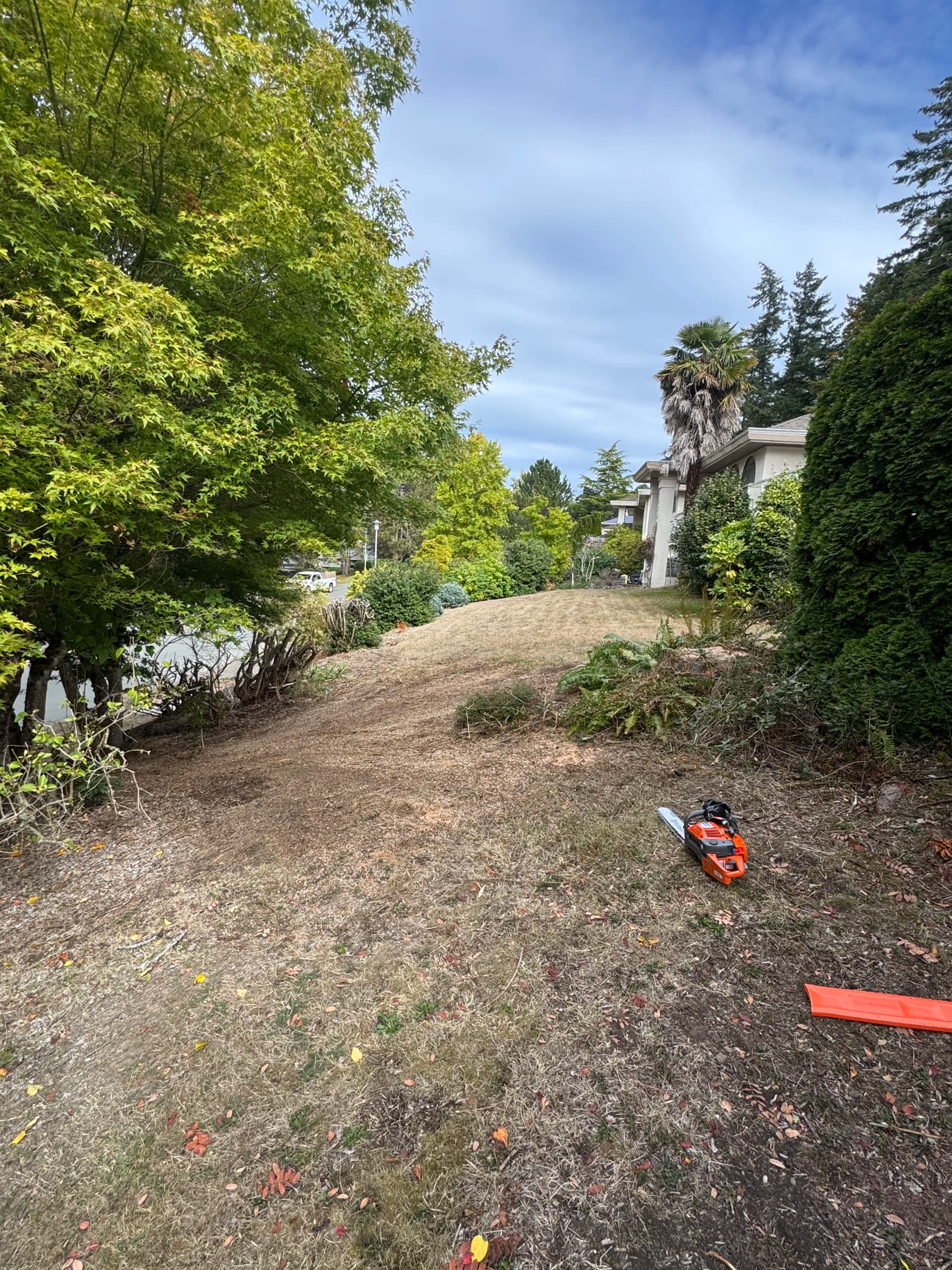
We worked through it systematically, cutting it down and breaking it apart piece by piece. A job like this pairs naturally with a full landscape cleanup - once the main material is cleared, you're left with a blank canvas that's ready for whatever comes next. Whether that's new planting, fresh mulch, or just reclaiming open space, the hard part is already done.
What stood out to us on this one was just how much space opened up once the tree was gone. The area around the house looked noticeably more open and breathable - the kind of difference you feel right away when you walk the yard.
Dead or dying trees don't get better on their own. The longer they sit, the more they become a problem - for the yard, for surrounding plants, and sometimes for structures nearby. Getting ahead of it is always the smarter move.